American Mini Svg: A Designer's Take on Small-Scale Embroidery
When I first pulled up the American Mini Svg file on my workstation, my immediate reaction wasn't just about the aesthetic; it was about feasibility. As someone who spends hours hooping fabric and threading needles for clients, I look at digital assets differently than a casual hobbyist might. I am looking for clean lines, logical stitch paths, and a design that translates well from a screen to a textured surface. This particular graphic, categorized under Crafts and Graphics, promises versatility with its inclusion of SVG, PNG, EPS, DXF, and PDF formats. But does it hold up when you are trying to create a high-quality handmade product that a customer will pay a premium for? Let's dig into the practical reality of using this design in a real-world embroidery project.
The First Impression: Mood and Layout
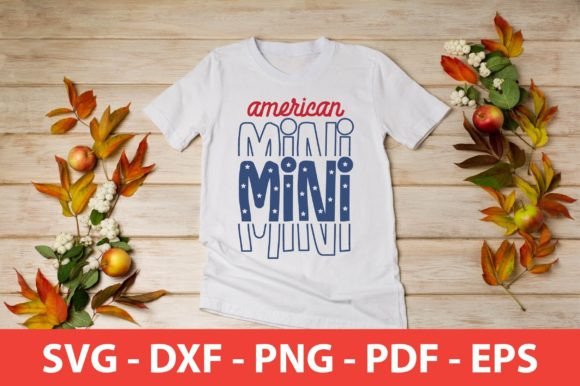
The visual personality of the American Mini Svg is compact and patriotic without being overly cluttered. In the world of machine embroidery design, "mini" often implies a challenge: can the details survive the compression required for small hoops? Upon inspecting the vector data in the SVG and EPS files, the shapes appear solid. There are no stray nodes or overly complex gradients that would confuse a digitizer if you were converting this manually, though for most users, this serves as a cut file or a base for appliqué.
The mood is classic and timeless, fitting seamlessly into projects ranging from Fourth of July celebrations to everyday boutique wear. It lacks the noise that often plagues free downloads, suggesting a level of professionalism suitable for a craft business. However, because it is a graphic asset, the final look depends entirely on how you choose to render it. Are you going for a sleek satin stitch outline, a dense fill stitch block, or perhaps a layered applique design? The simplicity of the source file allows for all these interpretations, which is a significant plus for custom work.
Real-World Application: The Tote Bag Test
To truly evaluate this file, I envisioned a specific scenario: a custom order for a local farmer's market vendor who needed branded tote bag design options. She wanted something subtle yet recognizable. The American Mini Svg seemed perfect for the corner of a canvas tote.
In this context, the scalability of the file is crucial. Since the package includes a high-resolution PNG and vector formats like DXF and SVG, resizing the graphic for a 4x4 hoop was straightforward. When stitched out on a medium-weight cotton canvas, the design maintained its integrity. The lack of excessive fine detail meant that the stitch density could be managed effectively without causing puckering. For a small shop product, this reliability is gold. Customers expect crisp edges, not a blobby mess where tiny elements merge together after washing.
I also considered this for sweatshirt embroidery. On fleece or French terry, the texture of the fabric can swallow small details. Here, the bold nature of the American Mini theme works in your favor. It stands out against the nap of the fabric, making it an excellent choice for custom apparel intended for cooler months. Whether it's a left-chest logo on a hoodie or a central motif on a baby onesie, the design scales down surprisingly well, provided you adjust your stitch settings to account for the fabric texture.
Navigating Fabric Challenges and Hoop Constraints
While the design is robust, there are areas where caution is necessary. If you are working with stretchy fabrics like jersey knits for baby embroidery projects, the stability of the design becomes paramount. Even a simple shape can distort if the stabilizer isn't up to the task. I strongly recommend using a cut-away stabilizer for garments that will undergo frequent washing, rather than a tear-away, to ensure the finished product retains its shape over time.
Another consideration is the placement on curved surfaces, such as caps. While the design is "mini," placing it on the front panel of a baseball cap requires precise centering. The geometric symmetry of the American Mini motif helps here, as slight off-centering is less noticeable than with asymmetrical scripts. However, be mindful of thread colors. On a dark navy cap, you will need high-contrast thread to make the design pop. Conversely, on a white apron or kitchen towel, a tonal approach might look sophisticated but could get lost in photos for your Etsy seller listings.
For those attempting to use this on thin fabrics like silk scarves or lightweight linens, the density of the stitching must be reduced. A standard digital embroidery file setting might be too heavy, leading to perforation or stiffness. Always test on scrap fabric first. This is non-negotiable for professional results.
Commercial Viability and Brand Consistency
For commercial embroidery professionals and creative entrepreneurs, the value of a design lies in its ability to enhance brand perception. The American Mini Svg offers a clean look that elevates the perceived value of the item it adorns. A simple tote bag becomes a statement piece; a plain mug wrap becomes a patriotic gift. This directly impacts customer trust and buyer engagement. When a client sees a neat, well-executed design, they associate that quality with your entire brand.
The inclusion of multiple file formats (SVG, PNG, EPS, DXF, PDF) means this asset isn't limited to just embroidery. You can use the PNG for printable mockup creation to showcase your products online before you even stitch a single thread. The PDF and EPS files are excellent for creating packaging labels or hang tags that match the embroidered item, ensuring brand consistency across your design assets.
Practical Notes for the Studio
Before committing to a production run, keep these technical checkpoints in mind:
- Check Licensing: While the file is versatile, always confirm the specific license terms regarding commercial use. Ensure you are cleared to sell finished items or digital derivatives.
- Contrast Testing: View the design in black and white mockups to ensure the shape holds up without relying on color cues. This is vital for personalized gift items where color options may be limited.
- Hoop Size Verification: Confirm that your machine's smallest hoop can accommodate the level of detail you desire. Sometimes "mini" designs need a slightly larger hoop to allow for proper framing and stabilization.
- Stitch Type Selection: Decide early if you are doing a flat fill, satin border, or appliqué. Each requires different digitizing adjustments that aren't automatically solved by the source file.
- Fabric Compatibility: Test on both light and dark backgrounds. Some details visible on white fabric may vanish on black fabric unless underlay stitches are properly configured.
In conclusion, the American Mini Svg is a solid contender for the modern maker's library. It bridges the gap between digital convenience and tactile craftsmanship. Whether you are producing holiday embroidery for a seasonal rush or stocking inventory for a boutique, this design offers the flexibility and clarity needed for professional results. Just remember, the file is only as good as the execution. Take the time to prep your materials, respect the limitations of your machinery, and let the clean lines of this graphic do the heavy lifting for your brand.